iPhone 16e : Apple’s iPhone 16e arrived in February 2025 as a curious experiment: a phone that borrows the brain of a flagship but strips away the flashy extras to hit a more palatable price point.
Now in April 2026, with prices dropping to as low as ₹48,890 after bank offers, this compact powerhouse has become the sweetest deal in Apple’s entire lineup.
If you’ve been waiting for an iPhone that doesn’t demand six figures but still delivers modern performance, this might be your moment.
Design That Feels Familiar Yet Fresh
The iPhone 16e sticks to Apple’s proven formula with a 6.1-inch OLED display housed in an aluminum frame that tips the scales at just 172 grams, making it one of the lightest phones you can buy today.
It measures 146.7 x 71.5 x 7.8 mm, slipping comfortably into pockets and small hands without feeling like a slab of glass.
The build quality is quintessentially Apple, with Ceramic Shield protection on the front and an IP68 rating for dust and water resistance.
However, Apple made some noticeable compromises to hit this price. The display is limited to a 60Hz refresh rate, a stark contrast to the 120Hz ProMotion panels found on Pro models and even many Android rivals.
The notorious Dynamic Island notch remains, flanked by thick bezels that feel dated in 2026. You get just two color options—Black and White—none of the vibrant hues Apple typically reserves for its standard lineup.
Performance That Punches Way Above Its Weight
Here’s where the iPhone 16e truly shocks: it packs the same Apple A18 chip you’d find in the standard iPhone 16, built on a 3nm process with a 6-core CPU and 4-core GPU.
Paired with 8GB of RAM, this setup handles everything from heavy multitasking to demanding games like Genshin Impact without breaking a sweat.
Apps launch instantly, animations stay smooth despite the 60Hz panel, and the phone feels future-proofed for at least four to five years of iOS updates.
The A18’s 16-core Neural Engine also unlocks full Apple Intelligence support, meaning you get access to AI-powered features like smart summaries, generative image tools, and enhanced Siri capabilities that older iPhones can’t touch.
This is a massive differentiator against competitors like the iPhone SE or Samsung’s mid-rangers, which lack the silicon muscle for on-device AI processing.
Camera: One Lens, Smart Tricks
Apple equipped the iPhone 16e with a single 48MP Fusion main camera featuring an f/1.6 aperture, Optical Image Stabilization, and Hybrid Focus Pixels.
This sensor can capture 24MP standard photos or switch to 48MP for maximum detail when lighting conditions permit.
Computational photography does the heavy lifting here, with Smart HDR, Deep Fusion, and Night mode ensuring decent results even in challenging scenarios.
The trade-off is glaring: there’s no ultra-wide lens, no telephoto zoom, and no dedicated macro mode.
You’re locked into the 26mm equivalent focal length, forcing you to crop digitally for wider shots or move physically closer for tight framing.
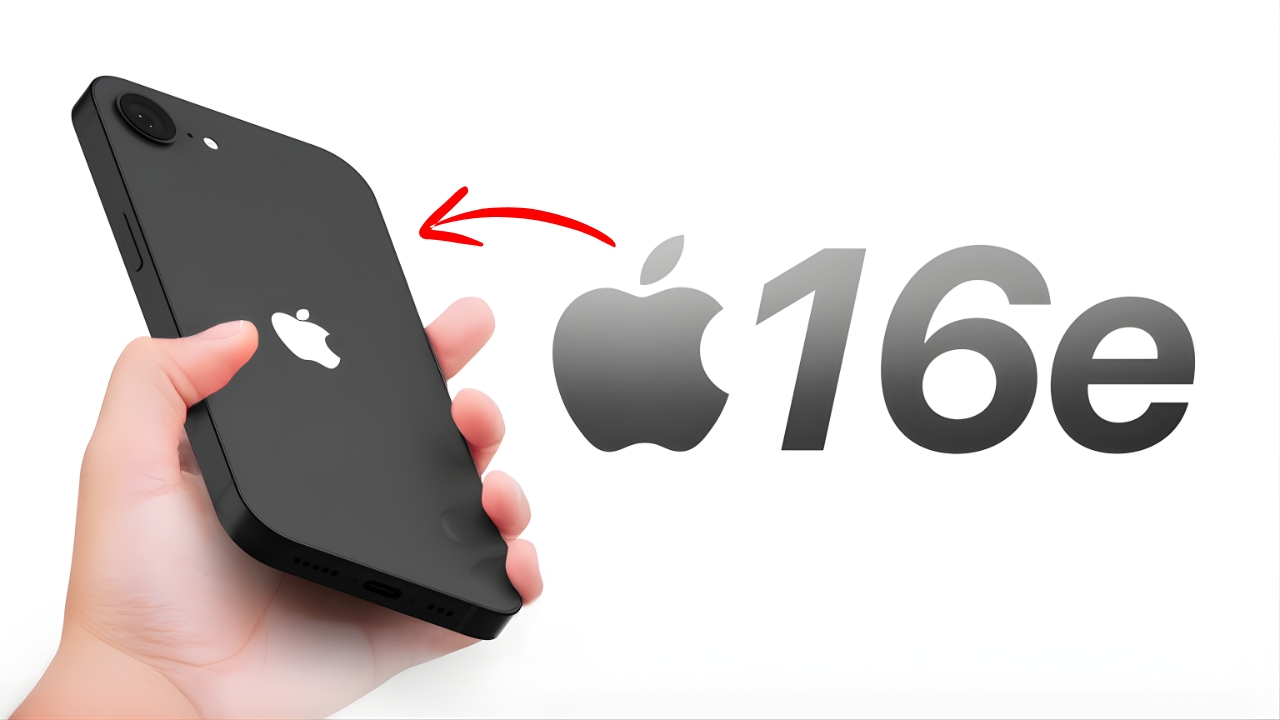
Portrait mode works surprisingly well thanks to software-based depth mapping, but low-light performance still lags behind flagship iPhones and Pixel rivals.
The 12MP TrueDepth front camera handles selfies and Face ID authentication reliably, though it struggles in dim environments.
Battery Life That Surprisingly Delivers
Apple squeezed a 4,005 mAh battery into this compact chassis, a significant upgrade over previous budget iPhones.
Real-world usage nets you a full day of moderate to heavy use, with screen-on time hovering around 8 to 9 hours depending on your workload.
The efficiency of the A18 chip and iOS optimization mean this phone easily outlasts many Android competitors with larger battery capacities.
Charging speeds, however, remain stuck in the past. Wired charging tops out at 20W, taking roughly 90 minutes for a full charge, while wireless charging crawls at 7.5W on standard Qi pads.
MagSafe support is conspicuously absent, a baffling omission that forces you to rely on slower third-party wireless chargers or stick to cables.
For a phone launched in 2025, these charging speeds feel archaic compared to Android rivals offering 65W to 120W fast charging.
Pricing and Value Proposition in 2026
Originally launched at ₹59,900 for the 128GB variant, the iPhone 16e has seen aggressive price cuts following the iPhone 17e’s arrival in early 2026.
You can now grab the base model for ₹48,890 with bank offers, while the 256GB variant hovers around ₹57,000 to ₹59,000 depending on the retailer.
The 512GB option remains pricey at ₹84,900, making it a tough sell against the standard iPhone 16.
At this discounted price, the iPhone 16e undercuts the iPhone 15, iPhone 14, and even Samsung’s Galaxy S23 FE while offering newer silicon and longer software support.
The only real competition comes from the Pixel 8a and OnePlus 12R, but neither can match Apple’s ecosystem integration or guaranteed five-year update commitment.
iPhone 16e Who Should Buy This Phone
The iPhone 16e makes perfect sense for upgraders clinging to iPhone 11, 12, or 13 models who want modern performance without flagship expenses.
It’s also ideal for students, first-time iPhone buyers, or anyone prioritizing battery life and processing power over camera versatility and display smoothness.
If you can live without ProMotion, MagSafe, and multiple camera lenses, this phone delivers 90% of the iPhone experience at 60% of the cost.
Also Read This : Nokia Transparent 5G Glass design smartphone with 300MP camera, 7000mAh battery
Avoid it if you’re a photography enthusiast, a mobile gamer who needs 120Hz smoothness, or someone who expects cutting-edge charging speeds.
For everyone else, the iPhone 16e at ₹48,890 is the closest Apple has come to a true value flagship—and it might just be the smartest iPhone purchase you can make in 2026.